

 English
  中文简体
中文简体  русский
  Español
  عربى
عربى 
Content
- 1 Quick Answer: Which Fabric Fits Your Use Case
- 2 Breathability: Why Mesh Fabric Has a Clear Advantage
- 3 Durability: Why Solid Fabric Often Holds Up Better
- 4 Common Mesh Fabric Types and Their Uses
- 5 Common Solid Fabric Types and Their Uses
- 6 Best Uses: Side-by-Side by Application
- 7 Common Mistakes When Choosing Between the Two
- 8 Final Checklist Before You Choose
Choose mesh fabric when breathability, airflow, and lightweight construction matter most, and choose solid fabric when durability, opacity, and structural support are the priority. Mesh typically allows significantly more airflow and dries faster, while solid fabric generally holds up better against abrasion, tearing, and prolonged UV exposure. The comparisons below break down exactly where each material wins, so you can match the right fabric to your specific project or product.
Quick Answer: Which Fabric Fits Your Use Case
Before getting into the technical detail, here's the fastest way to decide between the two:
- Choose mesh fabric for activewear, ventilation panels, bags, and any application where airflow or lightweight construction is the priority.
- Choose solid fabric for structural garments, upholstery, outerwear, and anything requiring opacity, wind resistance, or higher abrasion resistance.
- Many finished products combine both — using solid fabric for structure and mesh panels for targeted ventilation.
Breathability: Why Mesh Fabric Has a Clear Advantage
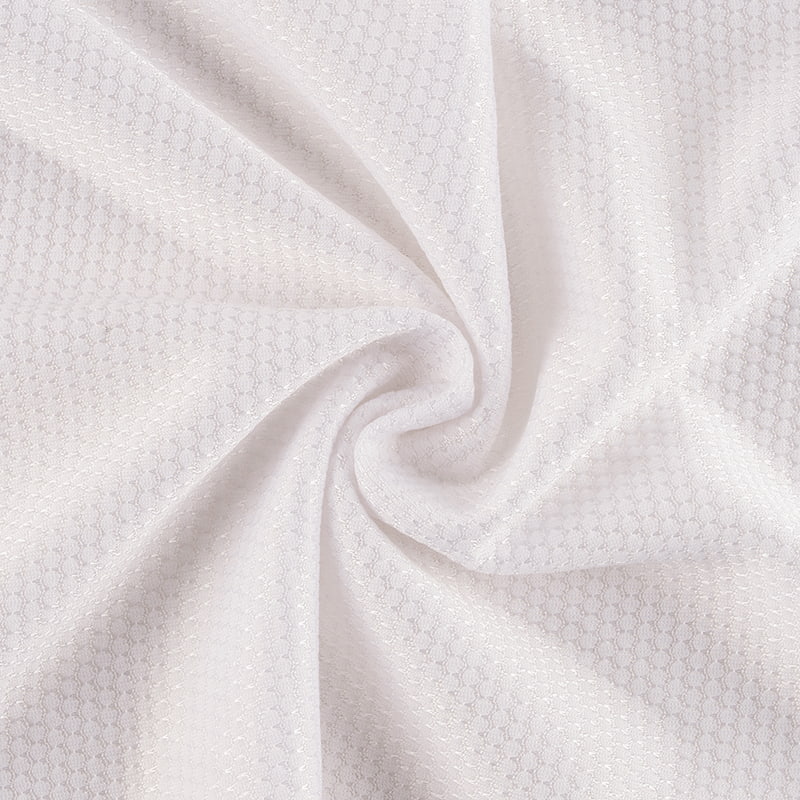
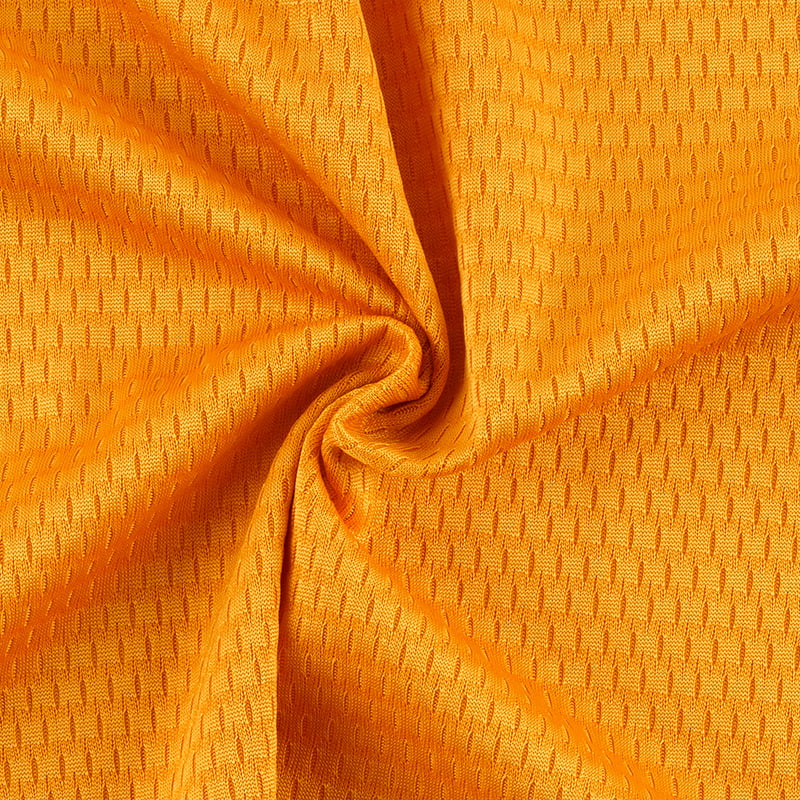
The defining structural feature of mesh fabric is its open, perforated weave or knit, which creates thousands of small gaps that allow air to pass directly through the material. Solid fabric, by contrast, is woven or knitted with a tight, continuous structure that blocks airflow almost entirely.
| Characteristic | Mesh Fabric | Solid Fabric |
|---|---|---|
| Airflow | High, open weave allows direct air passage | Low to none, tight construction blocks airflow |
| Moisture-Wicking/Drying Speed | Fast drying, moisture passes through easily | Slower drying, depends on fiber type |
| Weight | Lightweight due to open structure | Heavier, depends on fiber density |
| Opacity | Low, see-through or semi-transparent | High, fully opaque |
This is exactly why mesh fabric is the standard material for ventilation zones in athletic shoes, gym bags, and performance apparel — the open structure allows heat and moisture generated during activity to escape rather than getting trapped against the skin or inside the product.
Durability: Why Solid Fabric Often Holds Up Better
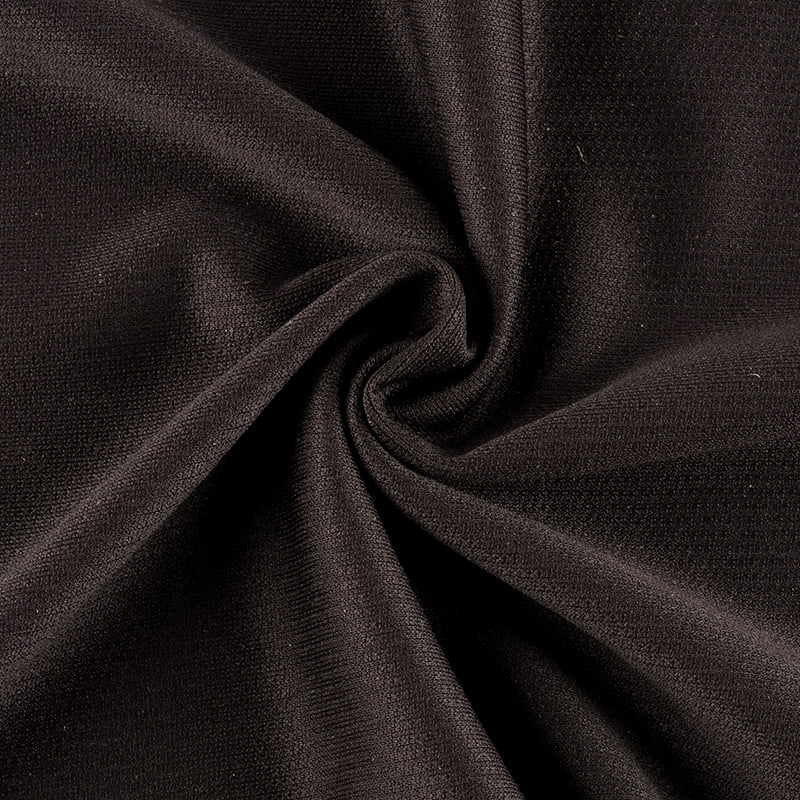
Solid fabric's continuous, tightly woven structure gives it a meaningful durability advantage in most demanding applications. Because there are no gaps in the weave, solid fabric distributes stress more evenly across the material and generally resists tearing, snagging, and abrasion better than mesh.
| Durability Factor | Mesh Fabric | Solid Fabric |
|---|---|---|
| Tear Resistance | Moderate, open structure can snag or run | Higher, continuous weave resists tearing |
| Abrasion Resistance | Lower, thinner fiber strands wear faster | Higher, denser fiber structure |
| UV/Sun Exposure Resistance | Lower, unless specifically UV-treated | Generally better, especially with coated finishes |
| Long-Term Shape Retention | Can stretch or sag over repeated use | Holds structural shape more consistently |
This is why solid fabric remains the default choice for outerwear, upholstery, and structural garment panels where the material needs to withstand years of repeated stress, folding, and exposure without losing its shape or integrity.
Common Mesh Fabric Types and Their Uses
- Polyester mesh — affordable, quick-drying, and widely used in sports jerseys, bags, and shoe panels.
- Nylon mesh — stronger and more resistant to stretching than polyester, common in backpacks and outdoor gear.
- Spandex-blend mesh — adds stretch and recovery, frequently used in fitted activewear and compression garments.
- Power mesh — a denser, firmer mesh used in shapewear and structured undergarments where some support is still needed alongside breathability.
Common Solid Fabric Types and Their Uses
- Cotton twill — durable and versatile, commonly used in workwear, bags, and casual apparel.
- Ripstop nylon — reinforced with a grid weave to resist tearing, popular in tents, jackets, and outdoor equipment.
- Canvas — heavyweight and highly durable, used in upholstery, bags, and industrial applications.
- Jersey knit — a softer solid fabric with some natural stretch, common in T-shirts and casual wear.
Best Uses: Side-by-Side by Application
| Application | Recommended Fabric | Why |
|---|---|---|
| Athletic Apparel/Gym Wear | Mesh | Ventilation and fast moisture evaporation during activity |
| Outerwear and Jackets | Solid | Wind resistance, structure, and durability |
| Bags and Backpacks | Both (combined) | Solid for structure, mesh for pockets and ventilation |
| Upholstery/Furniture | Solid | Higher abrasion resistance and long-term durability |
| Window Screens/Insect Netting | Mesh | Airflow while blocking insects and debris |
Common Mistakes When Choosing Between the Two
- Using mesh fabric in a structural role where solid fabric's tear resistance is actually required.
- Choosing solid fabric for a high-ventilation application, leading to overheating or slow moisture evaporation.
- Overlooking opacity requirements — mesh's see-through quality can be a problem for garments needing full coverage.
- Assuming all mesh types perform the same — power mesh and lightweight sports mesh have very different stretch and support characteristics.
Final Checklist Before You Choose
Use this checklist to finalize your fabric decision:
- Is airflow and breathability the top priority? → Mesh fabric is the better choice
- Does the application need structural durability or abrasion resistance? → Solid fabric holds up better
- Is full opacity required? → Solid fabric, since mesh is inherently semi-transparent
- Could the product benefit from both? → Consider combining solid panels for structure with mesh panels for targeted ventilation
Neither fabric type is universally superior — mesh wins on breathability and weight, solid fabric wins on durability and structure, and many of the best-performing products on the market succeed precisely because they combine both in the right places.