

 English
 中文简体
 русский
 Español
 عربى

Content
- 1 What Is Boucle Knit Fabric?
- 2 How Boucle Knit Fabric Is Made
- 3 Fiber Choices That Shape the Hand Feel
- 4 Performance: What Boucle Does Well and Where It Struggles
- 5 Where Boucle Knit Fabric Works Best
- 6 Boucle Compared with Other Textured Knits
- 7 Pairing Boucle with Other Knit Textures
- 8 Specifying and Checking a Boucle Order
- 9 Care Guidance for Finished Garments
- 10 Common Questions from Buyers
Boucle knit fabric has a way of announcing itself before anyone touches it. The face is nubby and a little uneven, built from small loops that sit proud of the ground structure, so light lands on it in soft patches instead of one flat shine. That gentle irregularity is why the fabric keeps returning season after season in cardigans, overshirts, dresses, and throws.
For anyone specifying it, though, boucle is not one fabric. It is a family of knits defined by looped yarn and a textured face, and how it behaves depends on the fiber, the yarn build, the knitting structure, and the finishing route. The notes below walk through those variables so you can read a sample quickly and ask sharper questions before you place an order.
What Is Boucle Knit Fabric?
The name comes from the French word boucler, which means to curl or to loop. In textile terms, boucle yarn carries small loops or curls along its length. When that yarn is knitted, the loops sit on the surface and create the knotty, pebbled look most buyers recognise instantly.
There is an important distinction here. A true boucle gets its texture from the yarn itself, created during spinning on specialised equipment. A boucle-effect fabric gets a similar look from the knitting structure, using fancy yarns, tucks, floats, or jacquard patterning to raise the surface. Both can look convincing in a swatch, but they behave differently in bulk, in cutting, and in washing, so it is worth confirming which one you are buying.
Quick check: rub the face of the swatch and then look at the reverse. A true loop yarn often shows a plainer back, while a structural effect tends to repeat more regularly across the full width.
How Boucle Knit Fabric Is Made
Building the yarn
Boucle yarn is usually assembled from at least two components: a core or ground yarn that carries the strength, and an effect yarn that forms the loops. The effect yarn is fed faster or at a different tension so it buckles into little curls, and a binder may then lock the structure. Loop size, loop density, and the ratio between core and effect decide whether the final surface reads as a fine nub or a bold, chunky texture.
Knitting and finishing
Most boucle knits are produced on circular knitting machines in either single or double form. A single knit gives a lighter, more drapey fabric with texture on one face. A double knit builds a second layer, which adds body, reduces edge curling, and lets a designer keep a smoother inside surface against the skin. If you want a broader view of how knit structures differ, our note on warp and weft knitting explains the underlying mechanics.
Finishing decides how soft the fabric feels. Washing, brushing, tumbling, and heat setting can lift the loops, calm them down, or stabilise the width. A well-finished boucle should feel soft without losing the definition that makes the surface interesting in the first place.
Fiber Choices That Shape the Hand Feel
Fiber choice drives warmth, weight, and the way the loops stand up. The table below compares the four directions we are asked about most often.
| Fiber | Hand feel | Warmth | Typical use | Care note |
|---|---|---|---|---|
| Wool and wool blends | Springy, slightly fuzzy | High | Coats, cardigans, throws | Gentle wash, dry flat |
| Cotton | Dry, cool, less lofty | Medium | Tops, kids wear, summer layers | Cool machine wash |
| Polyester and acrylic | Light, resilient, holds texture | Medium | Volume casualwear, home textiles | Easy wash, low iron |
| Blended loop yarns | Balanced and tunable | Varies | All-round apparel | Follow the main fiber |
Performance: What Boucle Does Well and Where It Struggles
The strengths are easy to list. Boucle traps air inside its loops, so it feels warmer than a flat knit of the same weight. It hides creases and small marks well. It also adds visual depth to simple silhouettes, which means a plain cardigan shape can carry a whole look without any print.
The trade-offs matter just as much. Loops can catch on jewellery, bag straps, and hook-and-loop fasteners. Long loose loops are more likely to pull and pill, especially in low-twist yarns. Airflow is usually lower than in mesh or open structures, so a heavy boucle is not the first choice for hot, humid weather. Drape depends on the ground structure: a fine cotton boucle can feel light, while a wool blend on a firm ground can hold a structured shape.
- Warmth per gram: high, thanks to trapped air in the loops
- Surface interest: strong, and it survives simple garment shapes
- Airflow: low to moderate, depending on loop density
- Durability: good in tight-twist yarns, weaker in loose fluffy ones
- Drape: tunable from soft to structured through the ground structure
Where Boucle Knit Fabric Works Best
In practice, boucle earns its place where a garment needs warmth and character at the same time. Common directions include:
- Casual outerwear such as overshirts, bomber shapes, and light jackets
- Knitwear including cardigans, pullovers, and vests
- Dresses and skirts in the heavier weights
- Childrenswear, where a soft nubby face feels cosy and hides wear
- Home textiles such as throws, cushions, and pet blankets
- Upholstery and bag panels in dense, low-stretch versions
One practical habit from our own cutting floor: when a boucle is used for the body of a garment, the areas that rub most, such as the back neck, the inside of the collar, and the pocket bags, are often cut from a smoother knit. Our double-sided flat fabrics are frequently chosen for that job because they lie flat, take a clean seam, and leave the textured face as the star of the design.
For the sleeves and side panels of an active casual jacket, a looped surface would hold too much heat. A lighter performance knit usually does more work there, and a quick-drying double-sided jacquard is a good example of that supporting role.
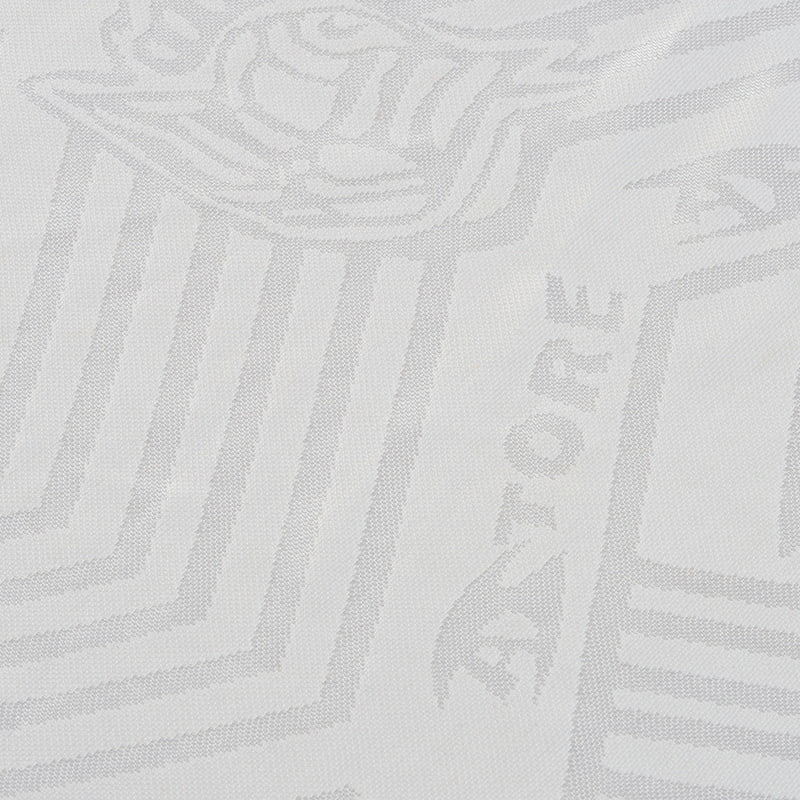 Quick-Drying Double-Sided Jacquard Fabric for Activewear and Outdoor UseA double-sided jacquard fabric with quick-drying performance, breathability, and durability for sports, outdoor activities, everyday wear, and high-intensity use.View Product →
Boucle Compared with Other Textured Knits
Buyers often compare boucle with other dimensional knits, and the honest answer is that they solve different problems. Boucle is about yarn-driven softness and warmth. Other textured knits are usually about structure, airflow, or pattern repeat.
| Fabric type | Surface | Stretch and airflow | Typical use |
|---|---|---|---|
| Boucle knit | Looped, nubby, irregular | Moderate stretch, low airflow | Cardigans, overshirts, coats |
| Double-sided jacquard | Raised pattern, more regular | Moderate stretch, medium airflow | Sports tops, paneled casualwear |
| Double-sided mesh | Open, structured holes | High airflow | Side and back panels, activewear |
| Flat knit | Smooth and even | Depends on structure | T-shirts, base layers, linings |
| Warp knit | Fine, stable, low cross stretch | Controlled | Structured panels and trims |
If you want a raised surface with more regularity and a finer hand, a double-sided jacquard with a grid effect is often a better fit than a loop yarn.
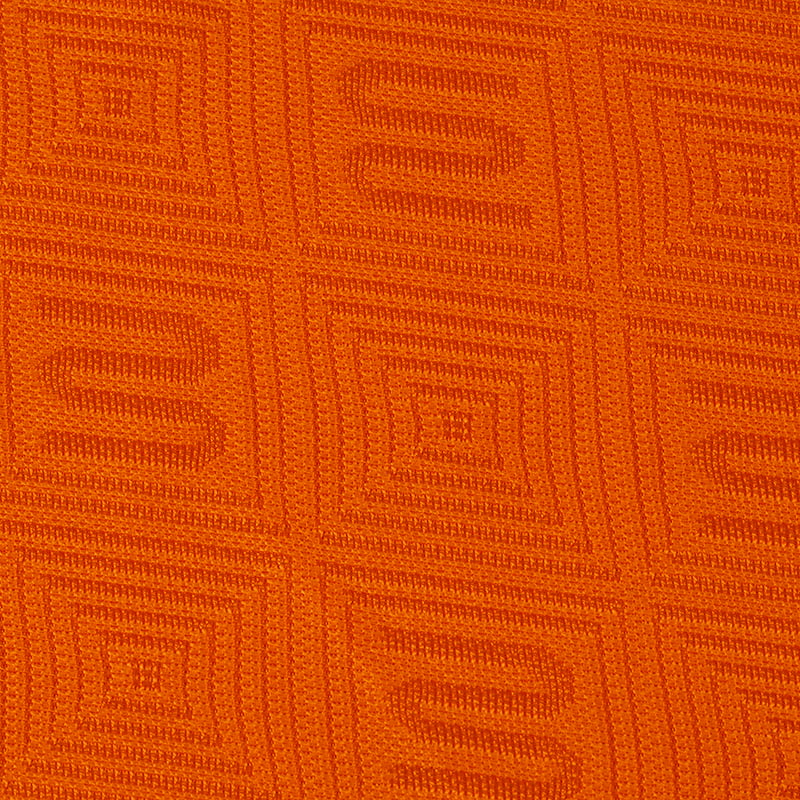 Checkered Double-Sided Jacquard Fabric for Apparel and Home DecorA checkered double-sided jacquard fabric with a fine grid texture, elasticity, abrasion resistance, and wash durability for apparel and home furnishings.View Product →
Pairing Boucle with Other Knit Textures
Texture works best when it is balanced. A garment that is looped from collar to hem can feel heavy and warm, so many collections mix a nubby face with an open, breathable knit in the same colour family. That contrast gives the eye somewhere to rest and gives the wearer somewhere to cool down.
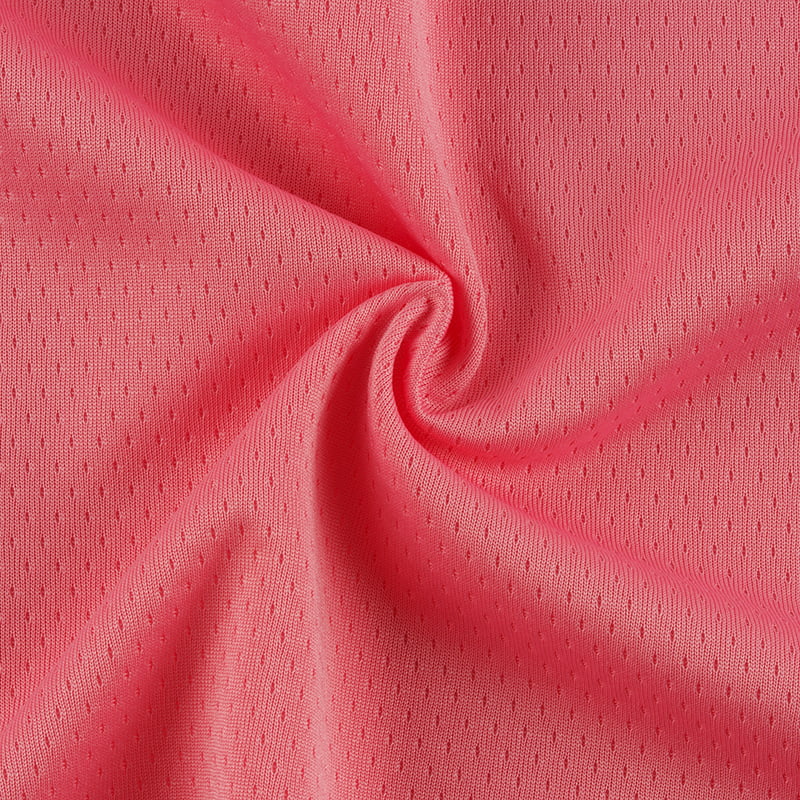
Open structures do that job especially well when the surface still needs dimension rather than flatness. A large honeycomb mesh, for example, reads as a texture in its own right while letting air move through the panel.
 Large Honeycomb Double-Sided Mesh Fabric for Breathable Textile ApplicationsA double-sided honeycomb mesh fabric with large pores for airflow, reduced weight, comfort, tensile strength, and abrasion resistance in repeated-use applications.View Product →
Specifying and Checking a Boucle Order
A short, disciplined checklist saves weeks later on. These are the points we walk through with customers before a boucle sample is closed:
- Confirm the texture source: true loop yarn or a structural effect.
- Ask for the exact fiber blend and yarn count, not only the trade name.
- Record weight in grams per square meter at a stated width, then re-check it after finishing.
- Test stretch and recovery in both directions, since loops can mask a loose ground.
- Run pill and abrasion tests before bulk, especially for cuffs, seats, and bag contact areas.
- Wash a full-width sample to confirm shrinkage and any change in surface height.
- Approve colour under both daylight and store lighting, because texture shifts how a shade reads.
- Lock in minimum order quantity, lead time, and packing before the sampling stage ends.
Care Guidance for Finished Garments
Boucle care is less about chemistry and more about mechanics. The loops are what make the fabric special, and the loops are also what suffer first.
- Wash inside out on a gentle, cool cycle to reduce friction on the face
- Skip fabric softener, which can flatten the loops over time
- Dry flat where possible, and avoid high heat that can shrink the ground structure
- Store folded rather than hung, so heavy panels do not stretch out of shape
- Refresh the surface with a fabric comb instead of pulling at loose loops by hand
Common Questions from Buyers
Is boucle knit fabric warm?
Yes, generally warmer than a flat knit of the same weight, because the loops hold a layer of still air. The effect is strongest in wool blends and lighter in fine cotton versions.
Does boucle pill?
It can, particularly when the loop yarn has a low twist or the loops are long and loose. A tighter twist, a denser ground structure, and a proper pill test before bulk all reduce the risk.
Can boucle be worn in summer?
In fine cotton or blended versions, yes, especially in loose tops and lighter layering pieces. Heavy wool boucle is better kept for cool weather.
Boucle knit fabric rewards a careful brief. Decide early whether you need the real loop yarn or a structural effect, choose the fiber around the season rather than the swatch alone, and test the sample the way the finished garment will actually be worn. Do that, and the texture stops being a risk and becomes the reason the piece sells.
We have spent more than a decade knitting and finishing fabrics in Ningbo, and textured constructions are part of our daily work. If you have a boucle direction in mind, send us the end use, the target weight, and the hand feel you are after, and we will come back with a construction that fits.