

 English
  中文简体
中文简体  русский
  Español
  عربى
عربى 
Content
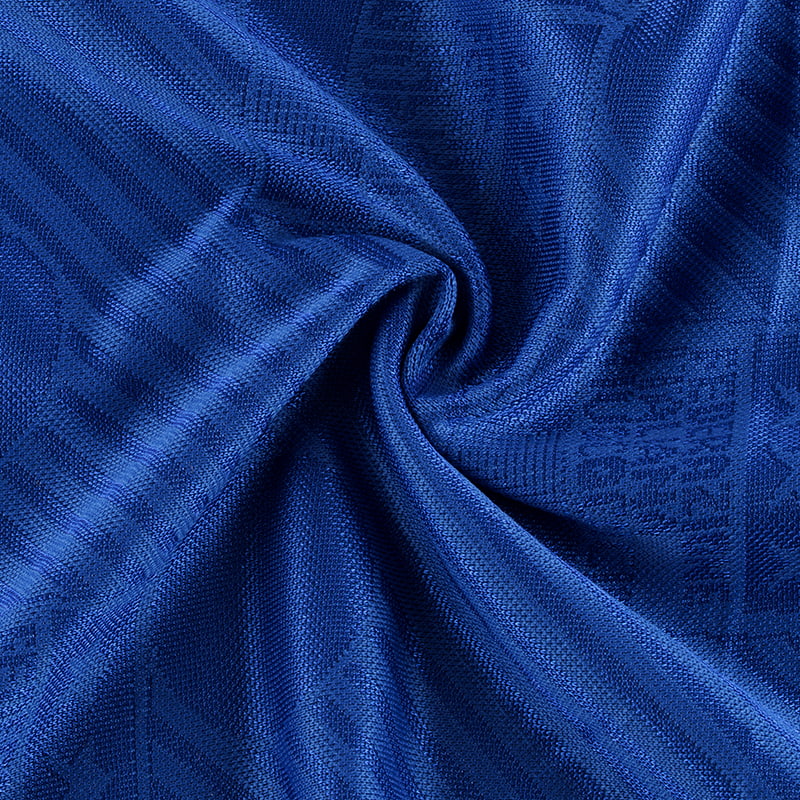
Jacquard fabric is a textile with a complex pattern woven directly into its structure, rather than printed or embroidered onto the surface afterward. It's made on a specialized jacquard loom that controls each warp thread individually, which is what allows intricate designs — florals, damask motifs, brocade-style patterns — to be built into the fabric itself. Because the pattern comes from the weave structure, genuine jacquard fabric is reversible, more durable than printed fabric, and has a distinct raised or textured feel you can both see and touch.
The sections below explain exactly how the jacquard weaving process works, what makes the resulting fabric different from printed or embroidered alternatives, and what to look for if you're buying or sourcing it.
Where the Jacquard Technique Comes From
The technique is named after Joseph Marie Jacquard, who introduced the jacquard loom in France in 1804. His innovation used a chain of punched cards to control individual warp threads, allowing a single loom to weave patterns that previously required a skilled weaver manually lifting threads by hand — a process that was slow and limited to simpler designs. The punch-card control system was so influential that it's often cited as an early conceptual ancestor of programmable computing, since it stored a repeatable pattern as a sequence of mechanical instructions.
How the Jacquard Weaving Technique Actually Works
A standard loom raises and lowers warp threads in simple, repeating groups, which limits patterns to basic stripes, checks, or small geometric repeats. A jacquard loom is different: it controls every individual warp thread separately through a system of hooks and needles, originally guided by punched cards and now guided by computer-controlled electronics on modern looms.
This individual thread control is what allows for elaborate, large-scale patterns with curves, shading, and fine detail — something a standard dobby or shaft loom simply can't replicate. Modern computerized jacquard looms can control several thousand individual warp threads in a single design repeat, compared to the few hundred hooks early mechanical jacquard looms typically managed.
Key Characteristics of Jacquard Fabric
- Woven, not surface-applied — the pattern is part of the fabric's structure, so it won't crack, peel, or fade the way a printed pattern can
- Reversible design — because the pattern is created by the weave itself, the reverse side often shows the same motif in inverted color or texture
- Raised, textured surface — you can typically feel the pattern by running a hand across the fabric, not just see it
- Higher durability — the woven structure resists wear better than printed designs, particularly important for upholstery and heavy-use applications
- Higher production cost — the specialized loom setup and weaving time make jacquard fabric more expensive to produce than printed equivalents
Jacquard vs. Other Pattern Techniques
| Technique | How Pattern Is Applied | Durability |
|---|---|---|
| Jacquard | Woven into fabric structure | High; pattern can't peel or crack |
| Printed | Ink applied to fabric surface | Lower; can fade or crack over time |
| Embroidered | Thread stitched on top of base fabric | High, but threads can snag or pull |
| Dobby weave | Woven, but limited to small geometric repeats | High, but far less pattern complexity |
Common Materials Used to Make Jacquard Fabric
Jacquard is a weaving technique, not a fiber, so it can be made from almost any yarn. The most common choices are:
- Silk — the traditional fiber for luxury jacquard like damask and brocade, prized for sheen and drape
- Cotton — widely used for apparel and home textiles, offering durability at a lower cost than silk
- Polyester — common in upholstery-weight jacquard, valued for wrinkle resistance and lower cost
- Viscose/rayon blends — used to add softness and a smoother drape to cotton or polyester jacquard
Common Uses of Jacquard Fabric
Weight and material typically shift depending on the end use, since a curtain needs different drape and density than upholstery fabric.
- Upholstery — heavier jacquard, often 300 GSM or more, for sofas, chairs, and headboards
- Apparel — lighter jacquard, typically 150–250 GSM, for dresses, jackets, and structured garments
- Curtains and drapery — mid-weight jacquard chosen for both pattern visibility and adequate drape
- Neckties and formalwear accents — fine silk jacquard for traditional patterned ties and scarves
How to Identify Genuine Jacquard Fabric
Because the term "jacquard" is sometimes used loosely in marketing, a few quick checks help confirm you're getting woven jacquard rather than a printed imitation:
- Check the reverse side — genuine jacquard shows the pattern in reverse or inverted color; printed fabric shows plain, undyed backing
- Run a hand across the surface — woven jacquard has a tactile, slightly raised texture that printed fabric lacks
- Hold the fabric up to light — woven patterns often show subtle differences in thickness and light transmission across the design
In short, jacquard fabric earns its higher price and reputation through how it's made: each warp thread is individually controlled to weave the pattern directly into the structure, rather than adding it afterward. That single difference is what gives genuine jacquard its durability, reversibility, and distinct textured feel.