

 English
 中文简体
 русский
 Español
 عربى

Content
When you sit down with a fabric spec sheet for a new T-shirt line, one line reads exactly like this: 100% polyester. It looks simple, but across the production floor the same fiber can become a drapey double-sided flat knit for a polo shirt, an open mesh back panel for a basketball jersey, or a quick-dry jacquard for training gear. The fiber is fixed; the structure is not. That distinction is what determines whether the finished garment feels breathable, stays stiff after washing, or shrinks in the first wash.
Here is the conclusion before the details: 100% polyester fabric is a practical, predictable and cost-efficient choice for many garments, but the knit structure you choose will matter more than the fiber content itself. If you are a clothing maker, brand owner or fabric buyer, the right question is not simply “is it polyester?” but “which polyester knit structure will perform for my end use?”
What 100% Polyester Fabric Actually Is
Polyester is a synthetic fiber made from polyethylene terephthalate (PET), a polymer derived from petroleum or recycled sources. When a fabric label says “100% polyester,” it means every fiber in the fabric is synthetic; no cotton, linen, wool or other fiber is blended in. This gives the material a clear personality:
- Durable and resistant to stretching, shrinking and wrinkling.
- Quick-drying and moisture-wicking when engineered with the right knit structure.
- Easy to wash, hold color well, and withstand repeated wear.
- Low cost compared with natural fibers, especially at high volumes.
On the downside, plain 100% polyester can feel less breathable than natural fibers, and it can retain odor if the structure and finish are not designed for sportswear. However, these limitations are mostly solved through fabric construction and functional finishing, not by changing the base fiber.
| Property | Typical Performance | What It Means for Buyers |
|---|---|---|
| Durability | High | Garments withstand frequent washing, friction and stretching. |
| Moisture management | Variable | Depends on knit density, hole structure and wicking finish. |
| Breathability | Low to high | Mesh and open-knit constructions breathe better than flat knits. |
| Drape and hand feel | Variable | Double-sided flat knits feel softer; single-sided knits are livelier. |
| Color retention | Good | Dyes well, especially with disperse dyes, and resists fading. |

Why Knit Structure Is the Deciding Factor
The same polyester fiber can be knitted or woven into very different fabrics. In the knit world, the first split is single-sided versus double-sided. Single-sided knits have a technical face and a technical back, making them lighter and more breathable. Double-sided knits have both sides knitted into a smooth surface, giving more body and better structure for polos, T-shirts and jackets.
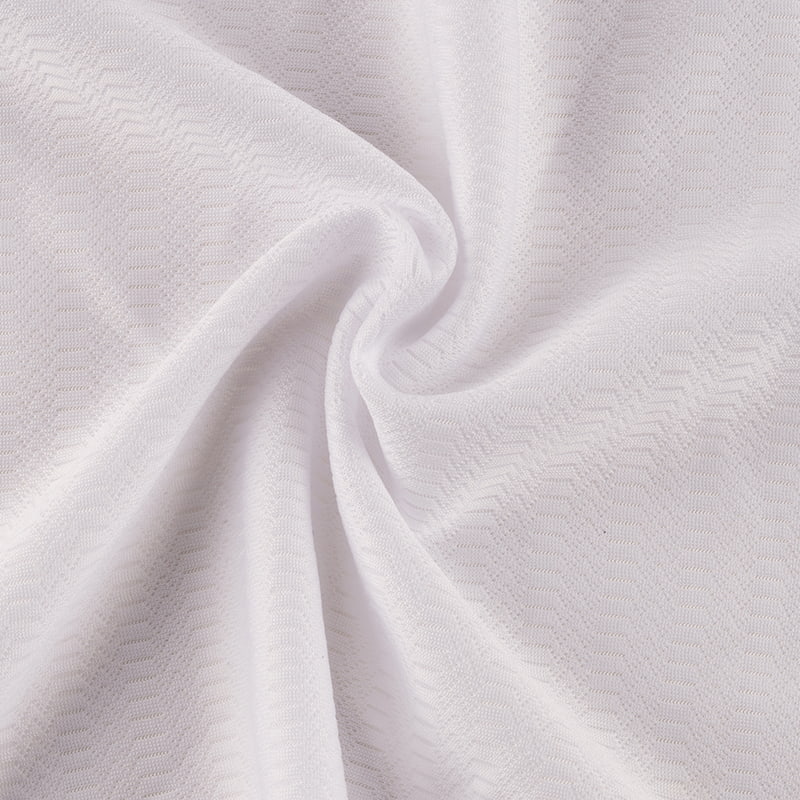
For a T-shirt or an everyday knit top, a double-sided flat knit like 75/72 double-sided flat fabric is a common choice. It holds its shape, gives a clean print surface and feels substantial without being heavy. If you are working with a 100% polyester composition, this type of fabric is especially reliable for uniform apparel that needs to look crisp through multiple washes.
Mesh and Jacquard: Performance-Oriented Structures
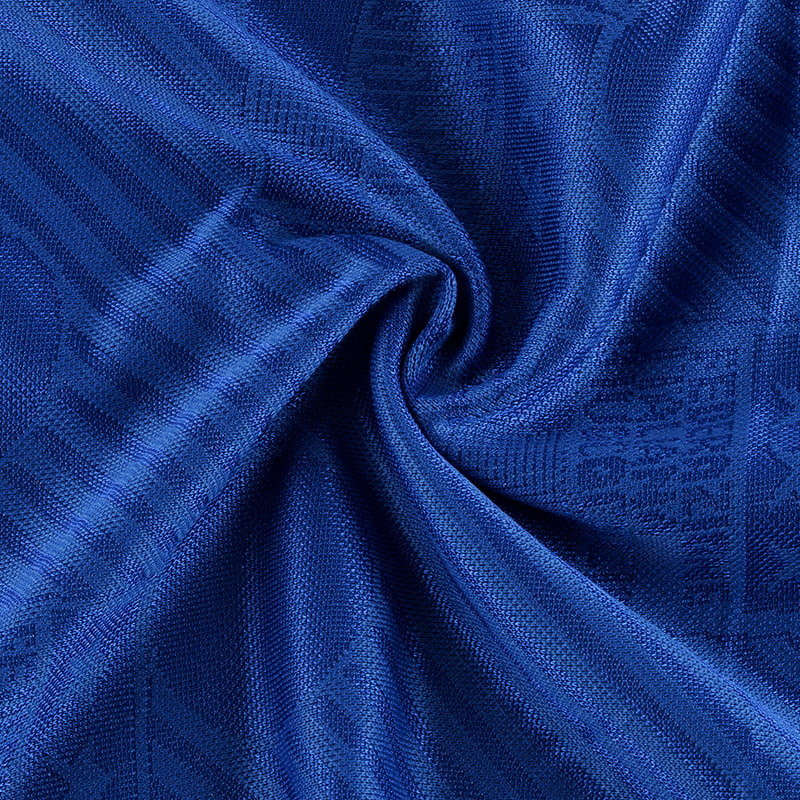
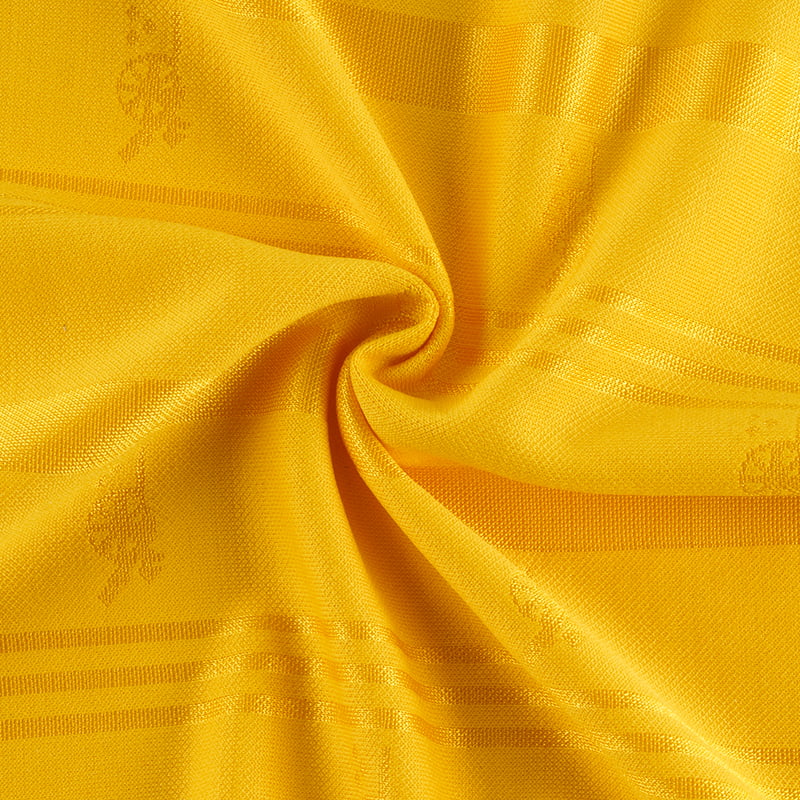
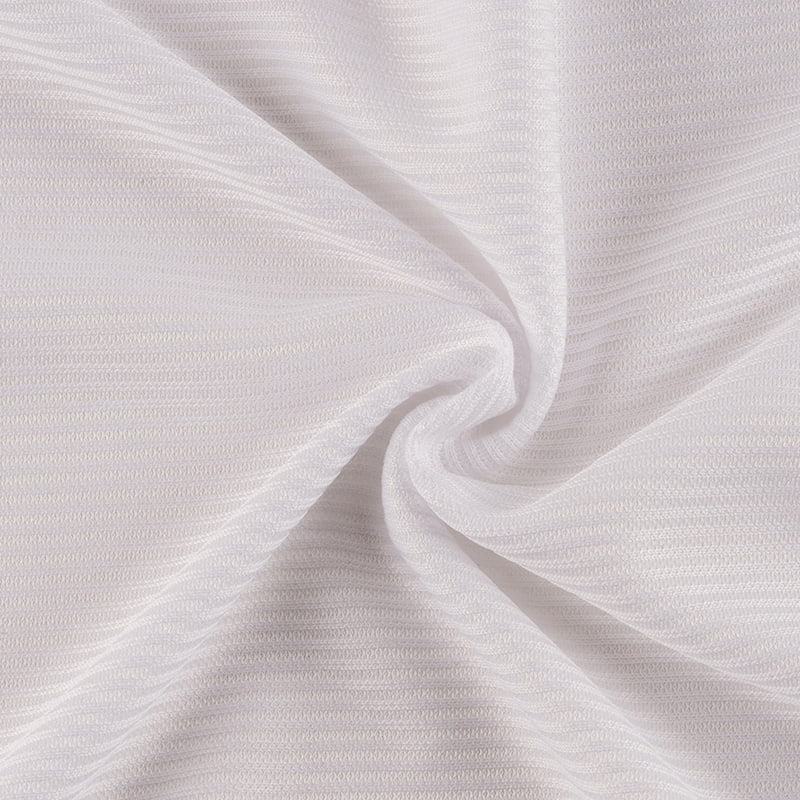
For sportswear, mesh fabrics are built around holes that let air move. A double-sided mesh with a pinhole, diamond or clover pattern can move moisture away from the skin while keeping a structured drape. Jacquard knits are more complex; they weave patterns into the fabric itself, which means a sports team logo can be knitted in without printing. This is why jacquard structures are common for jerseys, fanwear and branded athletic garments.
When a client asks for a breathable back panel or a quick-dry jersey, the yarn stays 100% polyester but the knitting machine creates a completely different fabric. The buyer’s job is to match the structure to the garment’s function.

Common End Uses for 100% Polyester Fabric
Because polyester is adaptable, it shows up in nearly every apparel category. From our production experience, the most frequent applications split into three directions.
- T-shirts and polos: double-sided flat knits provide a clean, stable surface for printing and a smooth finish that resists pilling. A 75/36 or 75/72 polyester double-sided flat fabric is a solid starting point for cut-and-sew programs.
- Sportswear and fanwear: mesh and jacquard structures dominate. Breathable mesh panels help vent heat on the back of a jersey, while jacquard fabrics can carry knit-in logos and branding. Sweat-wicking and quick-dry finishes are often applied to the same 100% polyester base.
- Children’s clothing: durable polyester resists wrinkles and shrinks less than natural cotton. Double-sided jacquard and single-sided jacquard options can be developed in kid-specific designs or weights, while mesh fabrics add cooling comfort for active play.

Buying Considerations: What to Specify Beyond “100% Polyester”
If you send a sourcing request for “100% polyester fabric,” you may receive dozens of very different quotes. To avoid costly surprises, be specific about the following parameters:
- Fabric weight (GSM): 140–160 GSM suits T-shirts; 180–220 GSM adds body for jackets or sweatshirts; below 120 GSM gets sheer and more suitable for mesh and athletic inserts.
- Structure and construction: specify double-sided vs. single-sided, flat, mesh, jacquard or warp knit. This is where the real performance difference lives.
- Stretch and recovery: some polyester knits are made without elastane and have low stretch; others are knitted with spandex or elastane blends for tighter athletic wear.
- Functional finishing: moisture-wicking, antibacterial, anti-UV, quick-dry, and anti-pilling treatments are applied as after-processing. Ask for test results if the garment needs to meet specific performance standards.
- Dyeing method and color fastness: disperse dyes are standard for polyester, but the quality of the dyeing batch can vary between suppliers. Press for color fastness ratings, especially for bright or dark shades.
- Minimum order quantity and lead time: small-batch sampling is essential before a large order. Confirm whether your fabric supplier can produce a lab dip and short sample within your timeline.
When you compare suppliers, focus on how they manage raw yarn quality and production consistency. A manufacturer that maintains long-term relationships with chemical fiber suppliers and has enough circular knitting machines in-house is more likely to deliver uniform fabric across multiple batches.
Choosing a Reliable 100% Polyester Fabric Supplier
For international buyers, the supplier’s communication language and export experience are just as important as the fabric quality. A textile producer with multi-language sales teams, direct factory access and equipment such as circular knitting machines, texturing machines, and finishing lines can bridge the gap between sampling and mass production. The company you work with should be able to explain the difference between a double-sided flat knit and a single-sided mesh in practical terms, not just give you a catalog.
At the end of the day, 100% polyester fabric is a broad category, not a single product. The winning approach is to define the garment, then walk back to the knit structure, the weight, the finish and the dye requirements. Do that, and polyester becomes one of the most reliable fabrics in your line.